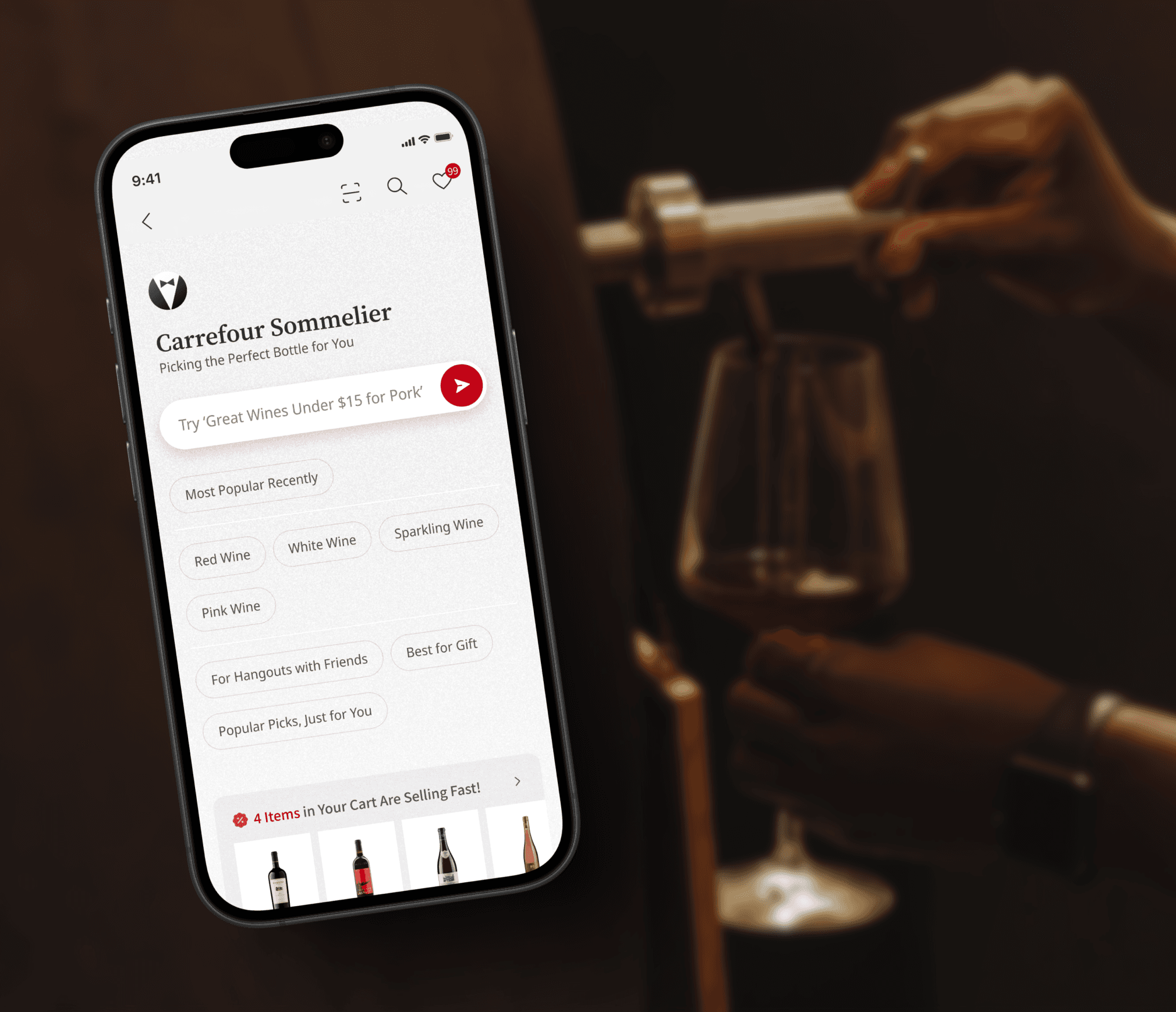
I led design of this AI product, Taiwan's first Google Gemini AI in retail

Type
E-commerce, Conversational AI
Role
UX Designer
Researcher
Team
Team: UI Designer, UX Researcher, Front-End & Back-End Engineer, PM
Duration
Sep - Dec 2023
Client
Carrefour
Platform
Mobile Web App
Stakeholder
CTO
Data Team Lead
Dev Team Lead
Market momentum restored. Revenue climbing again.
revenue growth within 2 months
Google Gemini chatbot in Taiwan retail
Users added wine to cart in ≤3 searches
"AI sommelier can really give me the right wine — in just 2 minutes."

— post-launch shopper feedback
CTO, Carrefour Taiwan
Research
To ship fast, I explored mature AI applications and market demands.
"What great AI UX looks like"
I analyzed 14 deployed AI applications to extract workable design and interaction patterns.
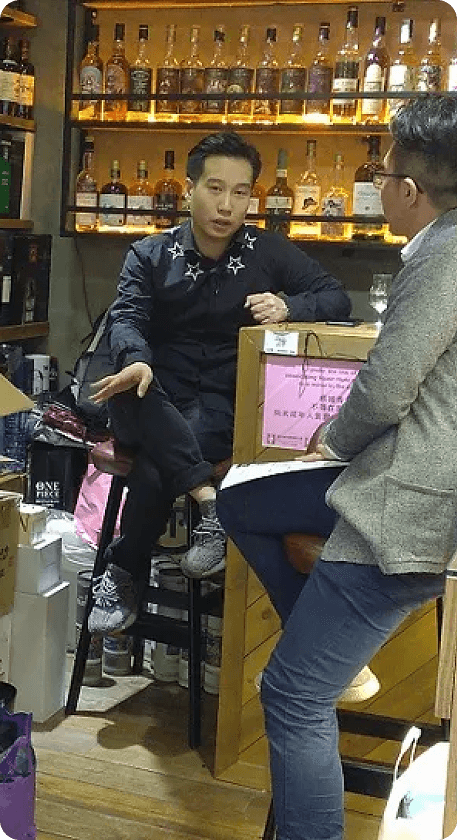
"How experts guide decisions"
We interviewed 2 liquor store owners and 1 Carrefour sommelier to understand wine selection challenges.
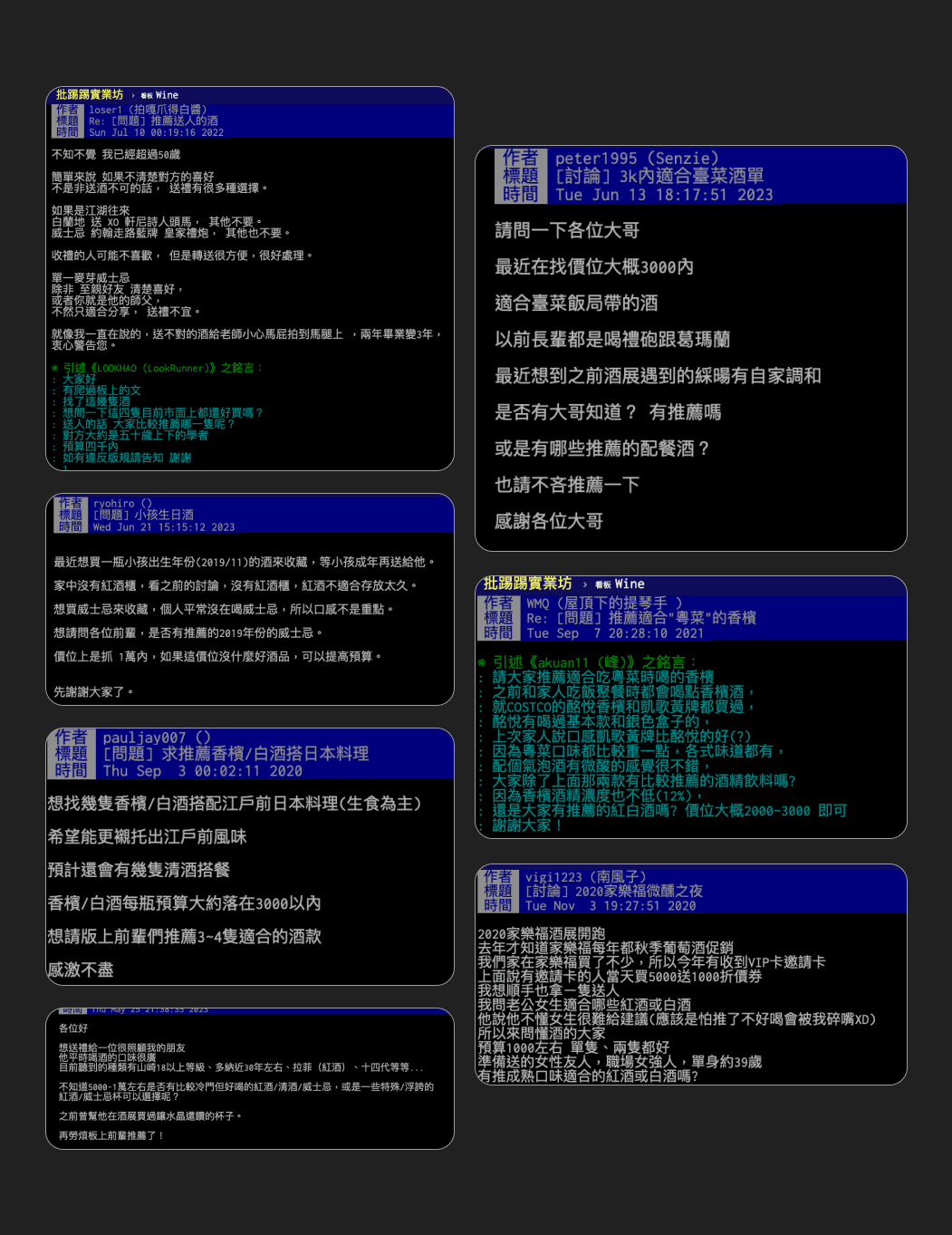
"What users actually ask"
I analyzed wine community forums to uncover beginner barriers and purchasing behaviors efficiently.
Key Findings
Sommeliers have a proven system. Wine jargon locks people out.
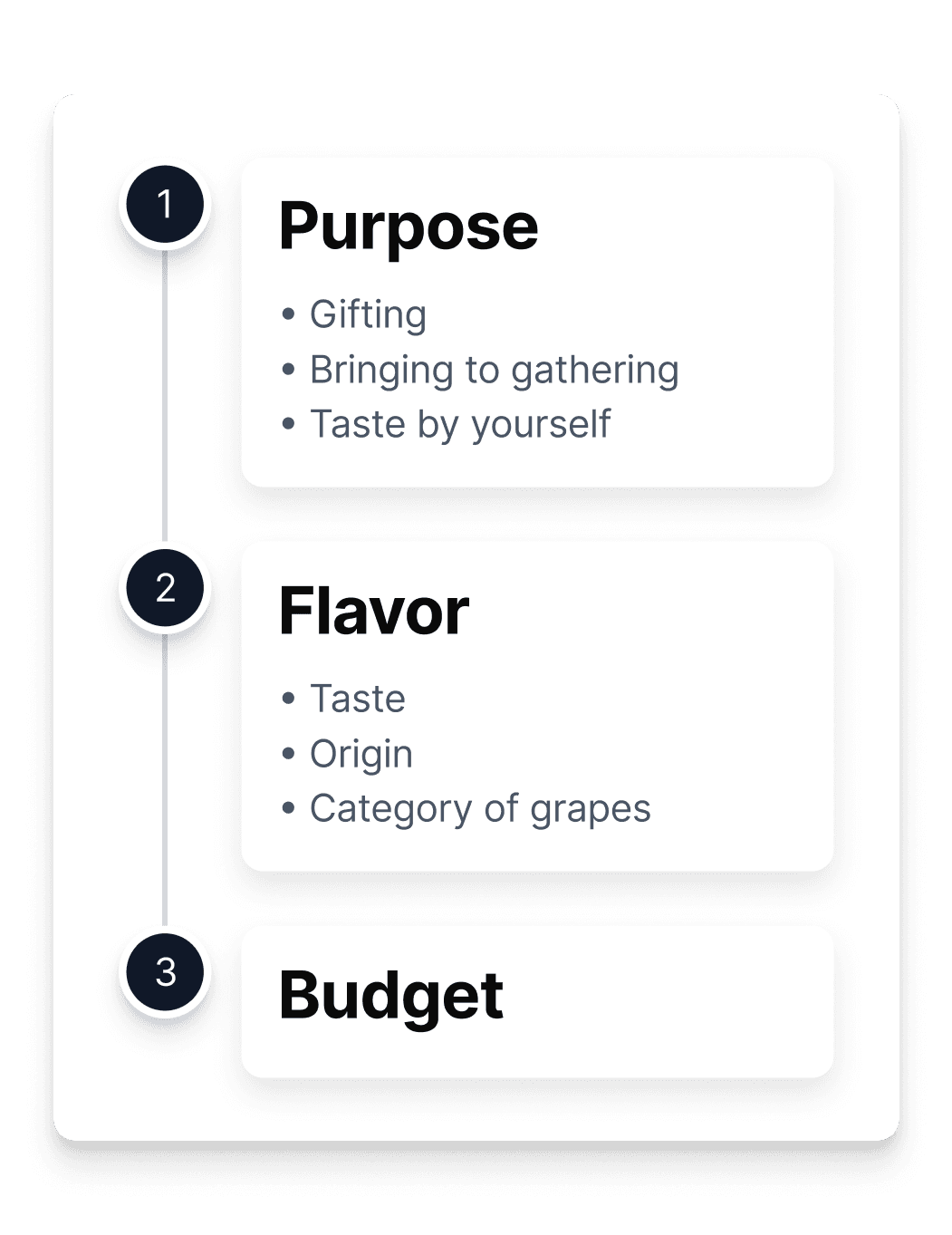
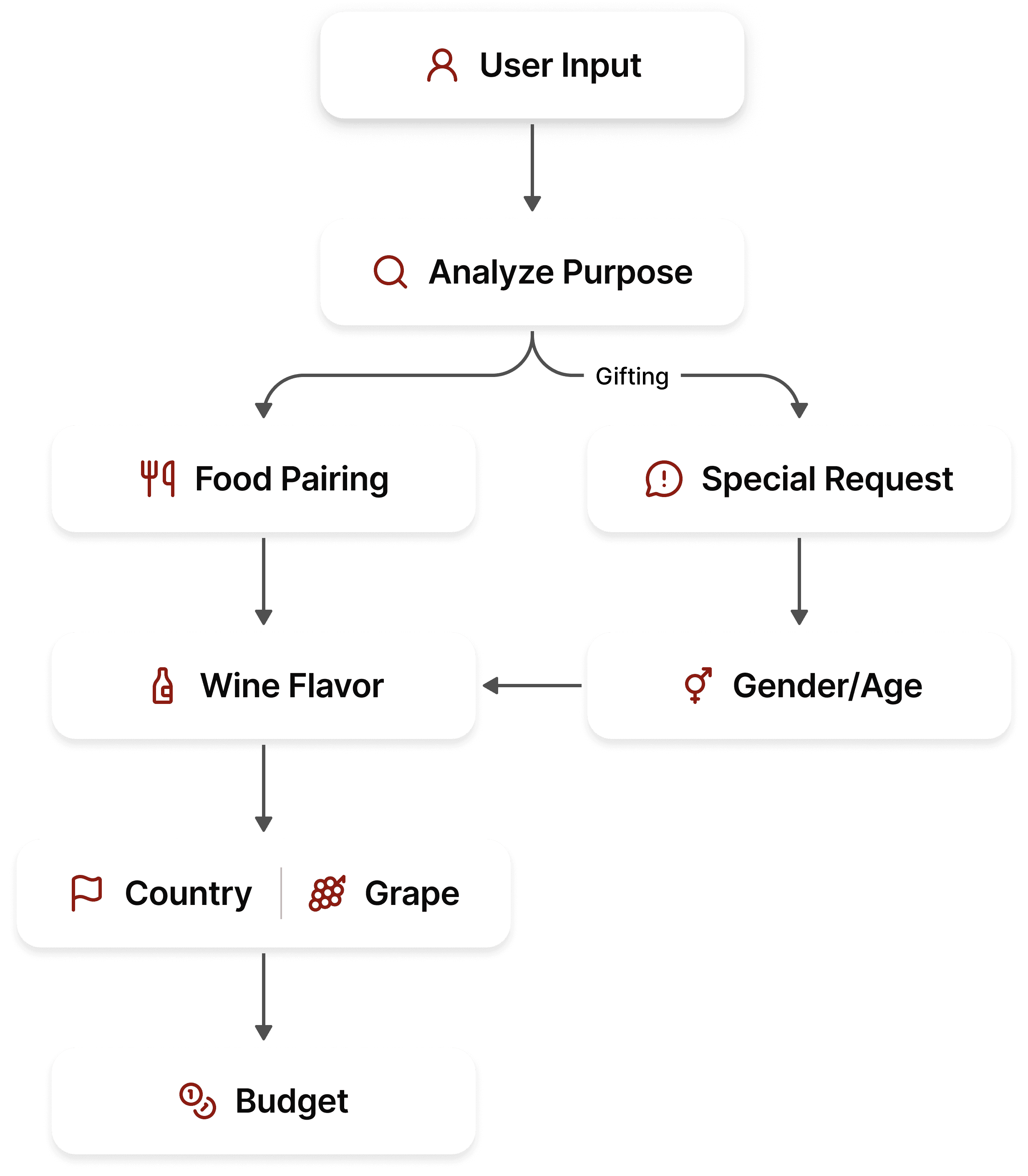
Sommelier's 3-step guidance
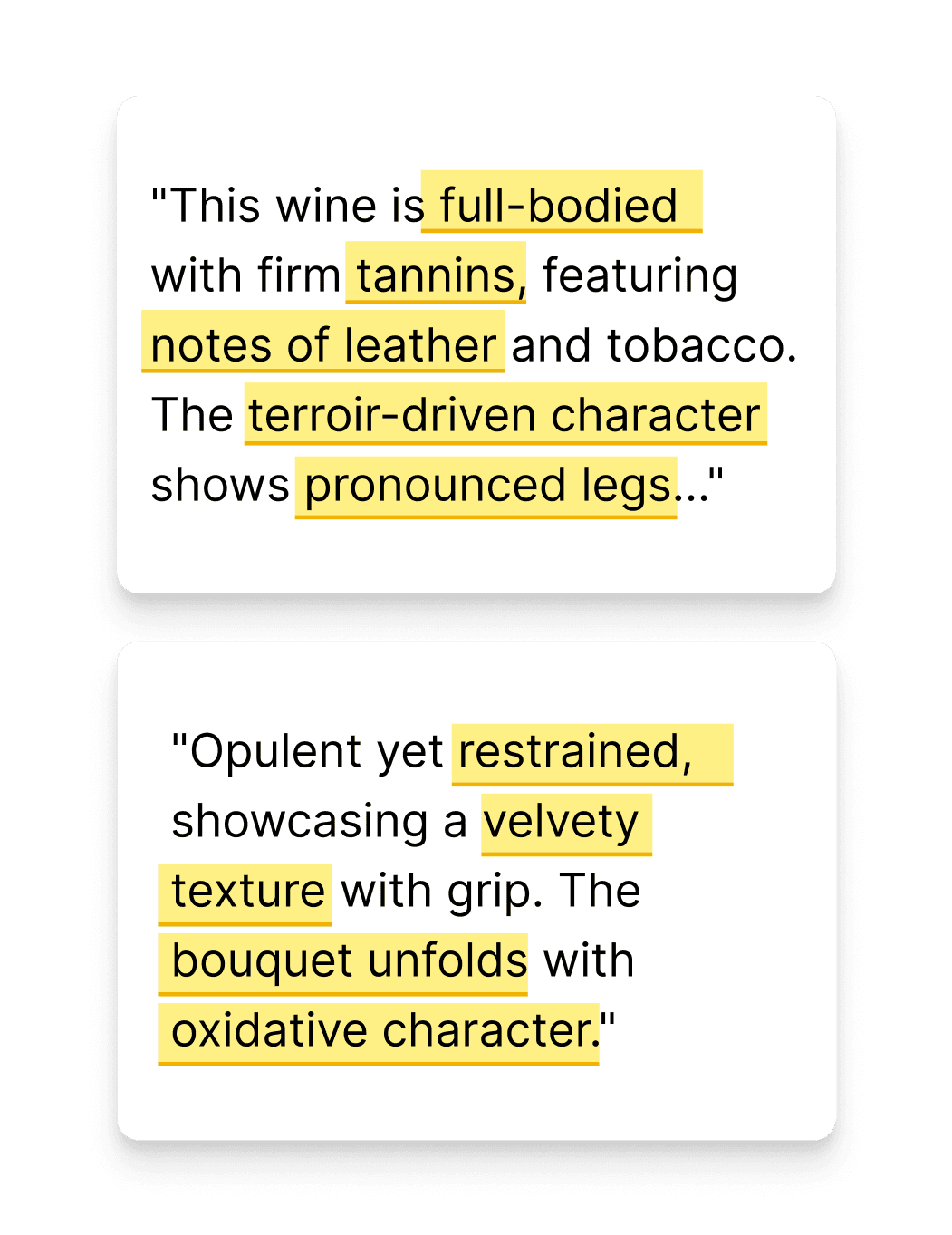
Knowledge barriers blocked shoppers
Shipped in 2025
CRM Sales System
I shipped 2 enterprise features impacting 1M+ users in 3 months
Duration
2025.05-08
Role
Product Designer Intern
Team
PM
Design Director
Senior Designers
India-Based Engineers
Platform
Salesforce Sales Cloud System

Key Feature 1
Expert-informed AI conversation flow
Before
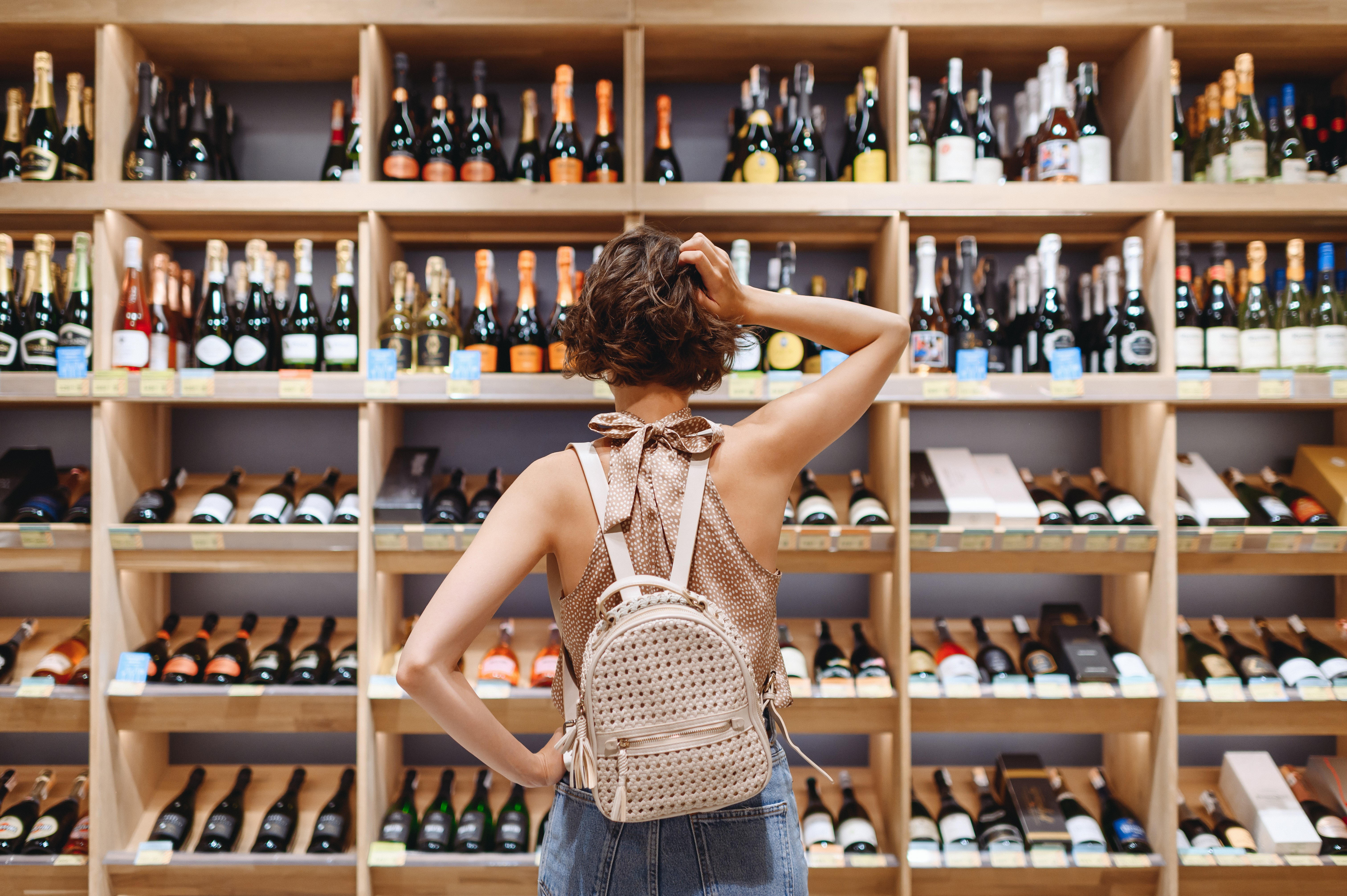
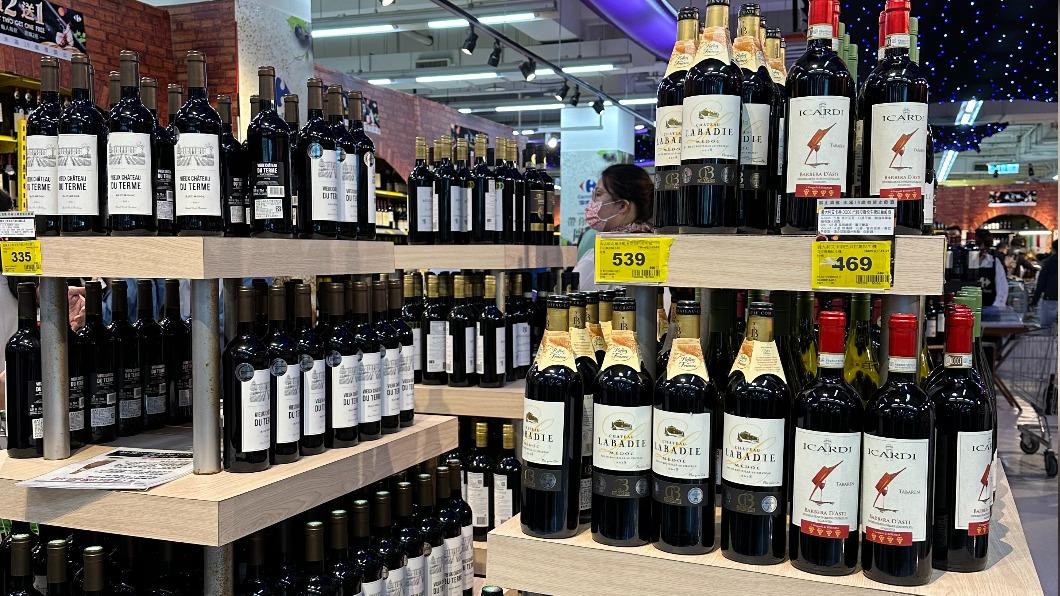
People leave empty-handed when wines all look the same without guidance.
Carrefour's extensive wine selection intimidated customers who lacked the knowledge to navigate options. Shoppers didn't know where to start — so they left.
Challenge
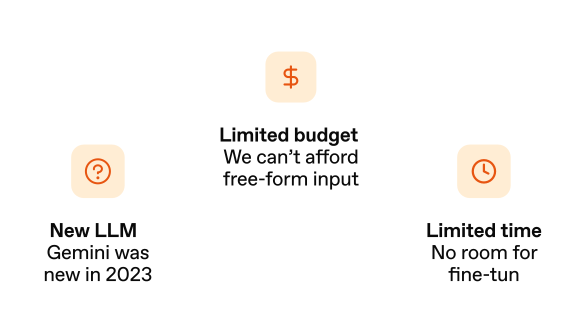
How to provide personalized recommendations, manage AI costs, and meet tight deadlines?
Generating full AI responses and translating them consumed too many tokens, driving up costs and slowing response times. The MVP timeline didn't allow time to extensively test and guarantee AI predictability.
Key Decision 1
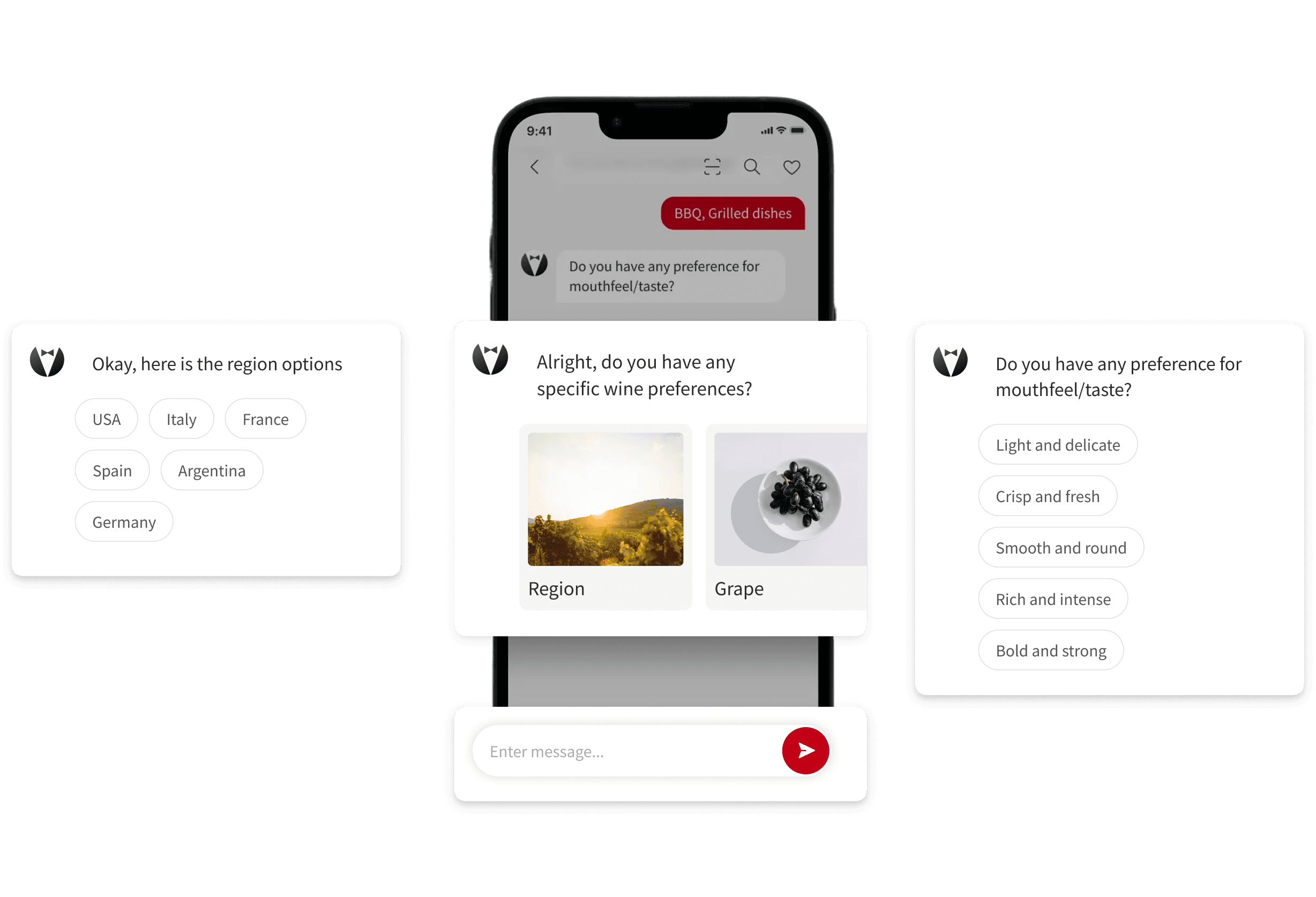
I translated sommelier expertise into step-by-step conversation flows
Sommelier expertise, translated into guided conversation flows with choice-based interactions:
accurate recommendations, controlled costs, no model fine-tuning required.
Key Decision 2
I designed choice-based interactions to ensure accuracy and delivery timeline
To guarantee accuracy and meet the 4-month deadline, I designed structured choice flows instead of free-form input. Guided selections ensured reliable recommendations without model training, while reducing decision anxiety for wine beginners.Structured selections guaranteed reliable recommendations without model training. Reduced decision anxiety for beginners.
The Design
Expert-guided conversation flow for reliable MVP accuracy
Sommelier expertise, translated into guided conversation flows with choice-based interactions:
accurate recommendations, controlled costs, no model fine-tuning required.

Key Feature 2
AI-simplified wine profiles and illustrations
Before
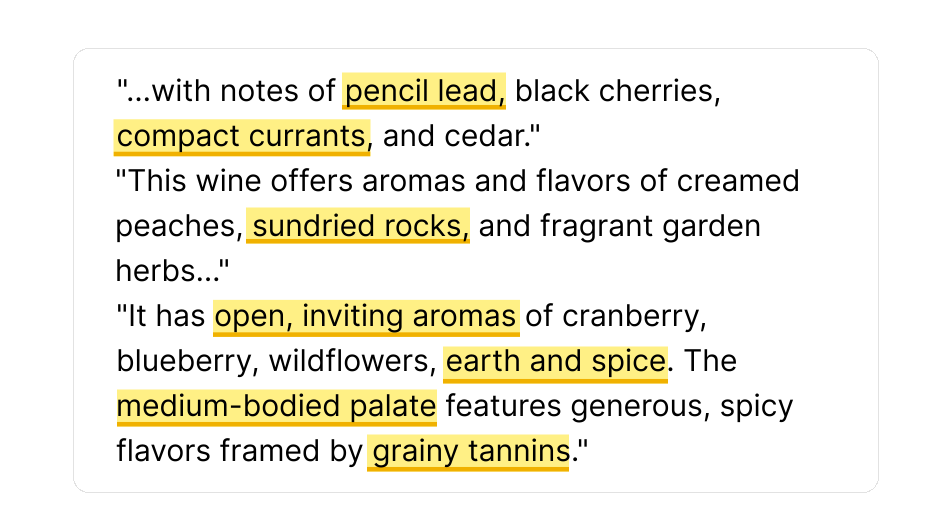
Expert wine language confused and excluded beginners
Technical terms like 'pencil lead,' 'sundried rocks,' and 'medium-bodied palate' excluded wine beginners rather than guiding them. This expert language reinforced intimidation, turning potential customers away without purchases.
Challenge
How to simplify wine language without sacrificing accuracy or credibility
Expert wine language ensures accuracy but excludes beginners. I needed to make descriptions accessible without oversimplifying—maintaining enough detail for trustworthy description while removing intimidating jargon that prevented purchases.

ACCESSIBLE LANGUAGE
Translate expert terminology into everyday words

EXPERT CREDIBILITY
Maintain trust and authority while being approachable

Description accuracy
Ensure descriptions genuinely match wine favors
I translated wine expertise into visual scales and everyday language
Simple descriptors and numerical scales transformed complex wine attributes into scannable, relatable information.
The Design 2
Approachable wine profiles with everyday descriptions and visual aids
I combined three elements to make wine expertise accessible: numerical scales (Acidity: 3) for quick comparison, everyday descriptions ('fresh and smooth' instead of 'medium-bodied'), and food pairing icons (beef, cheese, sweets) that relate to real dining experiences
Key Learnings
AI flows should evolve evolve with users
After launch, user behavior evolved. Initially, beginners needed structured guidance through choices, but as they became familiar with the system, they started entering complete requests upfront. I adapted by allowing direct input alongside guided flows and added 'I don't know' options for uncertain beginners
Multilingual AI requires cultural adaptation, not just translation
'Medium-bodied' doesn't translate culturally to Mandarin. Direct translation reduced recommendation accuracy — I learned to adapt concepts, not just words."